
Choose Cat Scratching Posts That Get Used
Find a post that fits your cat's habits, your room layout, and your cleaning routine.
Last updated:
Quick answer
Cat scratching posts do more than give cats a place to claw.
- Updated for 2026
- Source-backed comparisons
- Reader-first buying guides
- Transparent affiliate disclosure
Cat scratching posts do more than give cats a place to claw. They help redirect scratching away from sofas, rugs, and door frames by offering a surface that feels better and stands in the right spot. A good post is not just a tall stick with rope on it. It is a piece of cat furniture that should match how your cat stretches, where your cat walks, and what textures your cat already likes.
The best cat scratching posts usually solve three problems at once: they stay steady, they give enough room for a full stretch, and they use a scratching surface your cat will actually touch. Some cats like a narrow upright post, while others prefer a wider base, a slanted design, or a post with multiple surfaces. If the post is too short, too light, or hidden in the wrong room, many cats will ignore it and keep using furniture instead.
This sub-hub helps you compare cat scratching posts in plain language. You can look at height, base width, surface material, and shape without getting lost in product jargon. That makes it easier to match a post to a kitten, adult cat, or multi-cat home. It also helps you spot common listing details that matter in real life, such as whether the post is wrapped in sisal, covered in carpet, or built for corner placement. Start with your cat’s habits, then narrow down the style that fits the space you have.
Key highlights
- Match height to your cat's stretch
- Choose a stable base first
- Pick a texture your cat already likes
- Place it where scratching already happens
How to choose (and common mistakes)
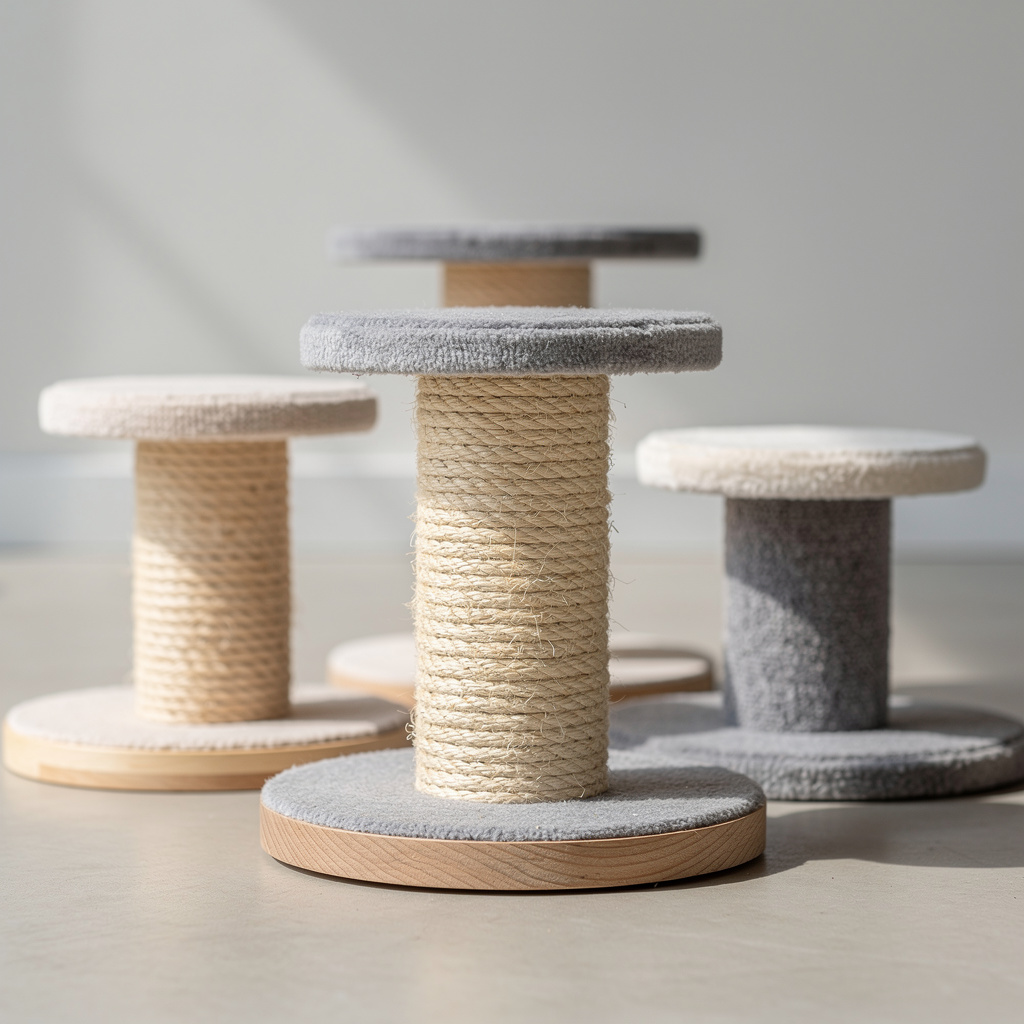
Start with your cat’s body size and scratching style. A tall cat usually needs a taller post, while a smaller cat may use a shorter one if the surface is easy to reach. Check the base size and column thickness next, because a wobbly post can scare cats off fast. Look at the scratching surface too. Sisal rope, sisal fabric, cardboard, and carpet each feel different under the paws.
Think about placement before buying. A post in the wrong room can sit unused, even if it looks sturdy. Put it near sleeping spots, walkways, or furniture your cat already targets. Avoid choosing only by looks, and do not assume every cat wants the same texture. One common mistake is buying a tiny decorative post that cannot handle a full stretch. Another is picking a heavy post with a slippery base that shifts on smooth floors. Compare height, stability, and surface together so the post works in daily use, not just in the product photo.
⚡ Quick Picks: Cat Scratching Posts
Three strong options to start with. Pick one that matches your goal, then jump to the guides below.

ANWA 32" Cat Scratching Post
This 32-inch tall vertical scratching post features a premium sisal surface and a reinforced stable base. It includes plush toys and is suitable for cats of all ages.

Amazon Basics Cat Scratching Post
A 35.4-inch tall single pillar scratching post featuring sisal rope and jute fiber wrapped around a wood base. Comes in neutral brown tones and includes a replaceable dangle toy.

EHEYCIGA Cardboard Cat Scratcher
This 26.8-inch cardboard cat scratcher features an L-shaped design intended to be placed against walls or sofas. It is made for indoor cats and comes in brown.
Carefully selected Cat Scratching Posts tested for quality and value by PetGearAdvisor experts.
Related Topics

Cat Balls

Laser Pointers

Catnip Toys

Interactive Cat Toys
Latest Guides
New guides are on the way — check back soon.
How We Choose & Recommend
Short, practical guidance first—then product picks when you are ready.
- We compare features and real-world use cases for Cat Scratching Posts.
- We scan user feedback for patterns (not one-off opinions).
- We call out trade-offs so you can pick confidently.
FAQ
How do I know if a scratching post is tall enough?
Look for a post that lets your cat reach up without bending awkwardly or running out of room halfway through the scratch. Many cats like to stretch from paws to shoulders while they claw. If your cat stands upright and the top is still easy to reach, the height is usually workable. Measure your cat at full reach, then add a little extra and avoid low posts that only catch the front paws.
Which scratching surface works best for most cats?
Sisal is a common starting point because it offers a firm, grippy feel that many cats accept quickly. Cardboard can also work well for cats that like to dig or shred, and some cats still prefer carpet if they already scratch rugs. Watch what your cat targets now, then pick one surface first. If one texture gets ignored, do not assume scratching itself is the problem.
What makes a scratching post feel sturdy?
A good post should stay planted when your cat pushes, twists, and pulls on it. Look for a wide base, solid floor contact, and a column that does not sway when you press the top with your hand. Heavier posts often feel more secure, especially for large cats. Test the base on your floor type before setting it up, and avoid models that rock even a little.
Where should I put a cat scratching post?
Place it where your cat already moves and pauses, such as near a sleeping area, a hallway turn, or beside a favorite chair. Cats often scratch after waking or while passing through busy spots, so a hidden corner may get ignored. Try one visible location first, then watch whether your cat uses it. If not, move it closer to the furniture your cat used before.
Do multi-cat homes need more than one post?
Often yes, because one post can become a traffic jam if several cats want the same spot. A mix of upright and flat scratchers gives each cat a choice and helps spread out use across the home. Put one post in the main hangout area and another in a different room or floor if needed. Space them out so no single area has to do all the work.
How can I help a cat use a new scratching post?
Set the post right next to the item your cat already scratches, then make the new surface easy to reach. A little catnip or a treat placed nearby can help create a positive first use. Keep the post steady and do not move it every day. If your cat still walks past it, try a taller model or a different texture instead.
Related in this hub
🐾 Our Top 3 Cat Scratching Posts
ANWA 32" Cat Scratching Post
This 32-inch tall vertical scratching post features a premium sisal surface and a reinforced stable base. It includes plush toys and is suitable for cats of all ages.
Amazon Basics Cat Scratching Post
A 35.4-inch tall single pillar scratching post featuring sisal rope and jute fiber wrapped around a wood base. Comes in neutral brown tones and includes a replaceable dangle toy.
EHEYCIGA Cardboard Cat Scratcher
This 26.8-inch cardboard cat scratcher features an L-shaped design intended to be placed against walls or sofas. It is made for indoor cats and comes in brown.
Carefully selected Cat Scratching Posts tested for quality and value by PetGearAdvisor experts.