
PetGearAdvisor
Find the Right Aquarium Pump Fast
Compare pumps and aeration gear with plain-language help. Learn what matters most so your tank gets the right water movement and bubbles.
- Updated for 2026
- Source-backed comparisons
- Reader-first buying guides
- Transparent affiliate disclosure
Last updated:
Aquarium pumps and aeration gear do a few important jobs, and the best choice depends on what your tank needs most. Some products push air to stones, sponge filters, or bubble bars. Others move water through filter lines, spray bars, or circulation loops. When you know the difference, it becomes much easier to match the product to the tank instead of guessing from the box.
This hub helps you compare aquarium pumps and aeration options in a practical way. You do not need to decode every spec first. Start with the tank size, then think about the task: steady bubbles, stronger circulation, or help feeding a filter. After that, look at noise, tubing size, outlet style, and what is included in the package.
A lot of confusion comes from products that seem similar but do different jobs. A quiet air pump may be perfect for a small tank with an air stone. A water pump may be the better pick if you want to move water through a return line or create more flow across the tank. The best choice is the one that fits your setup, your fish, and the space where the tank sits.
PetGearAdvisor keeps this simple: compare the spec sheet, check buyer feedback, and focus on the parts that affect daily use. That means fewer surprises, fewer extra purchases, and a better match for your aquarium from the start.
What you’ll get here
- Clear pump type comparisons
- Spec checks that matter
- Helpful accessory reminders
How to start (simple plan)
This section focuses on aquarium pumps aeration.
Start by deciding whether you need air movement, water movement, or both. If you want bubbles, surface motion, or help running a sponge filter, look at air pumps and matching airline tubing. If you need water circulation, look at water pumps and check the listed flow rate, outlet size, and lift height.
Next, compare the parts that affect fit and daily use. Noise level matters if the tank is in a bedroom or office. Included items matter too, since some listings add tubing, splitters, check valves, suction cups, or adapters, while others do not. A pump can look complete on paper and still need extra parts to work the way you want.
The biggest mistakes are choosing the wrong pump type, ignoring tubing or fitting sizes, and picking more output than the tank needs. A strong pump is not always better. The right one gives steady movement without blasting fish, rattling the stand, or wasting space on add-ons you did not plan for.
⚡ Quick Picks: Aquarium Pumps & Aeration
Three strong options to start with. Pick one that matches your goal, then jump to the guides below.
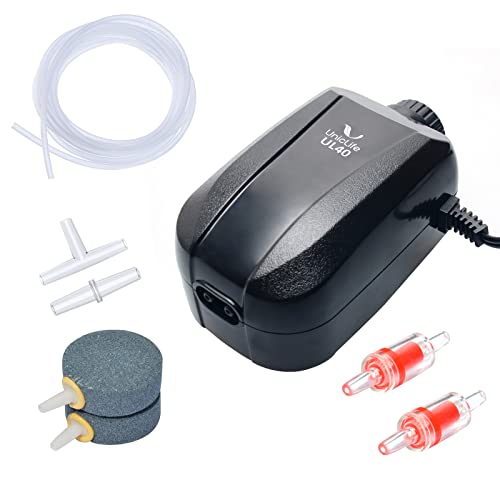
Uniclife 64 GPH Aquarium Air Pump
This air pump features dual outlets with adjustable airflow controlled by a rotary knob. It includes an air stone, airline tubing, check valve, and connector accessories, suitable for 10-100 gallon fish tanks.
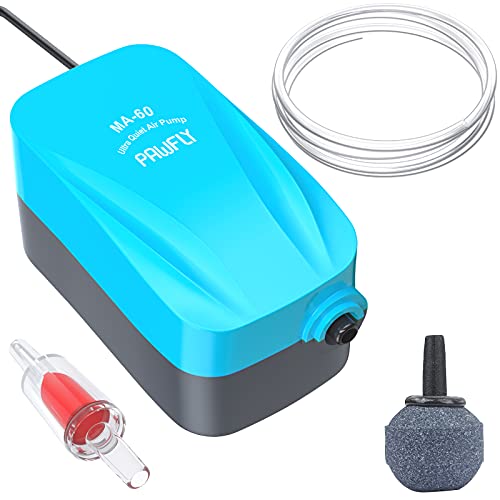
Pawfly Aquarium Air Pump Kit
This compact air pump offers a maximum airflow rate of 30 GPH and operates at 2 watts. The kit includes an air stone, nano bio sponge filter, airline tubing, and check valve accessories suitable for 3-20 gallon tanks or buckets.

HITOP Dual Outlet Aquarium Air Pump
This electric air pump features a dual outlet and adjustable air volume controlled manually. It operates quietly and is suitable for aquariums ranging from 10 to 100 gallons, including necessary accessories.
Carefully selected Aquarium Pumps & Aeration tested for quality and value by PetGearAdvisor experts.
Choose Your Next Step
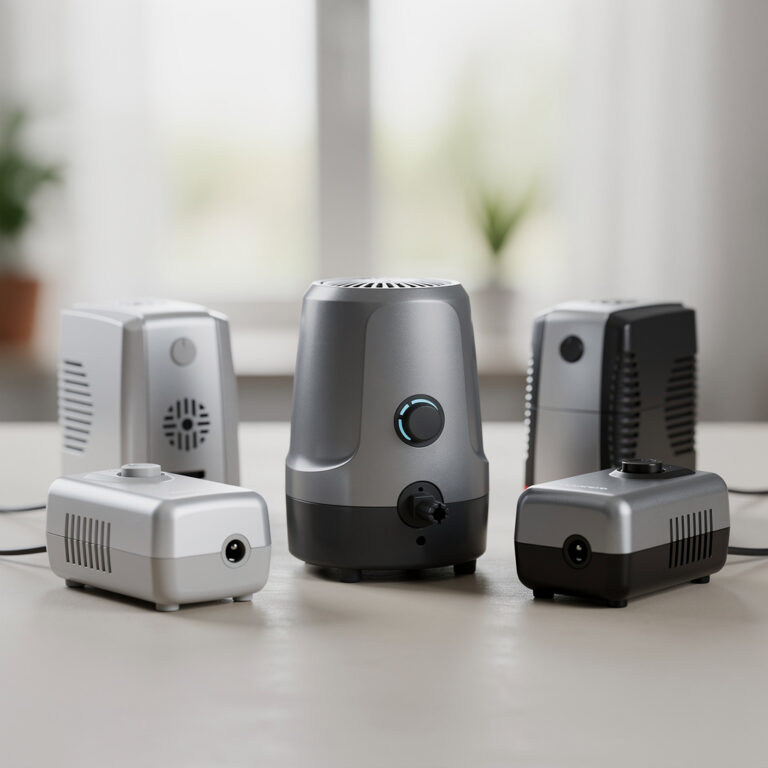
Air pumps for bubbles
Compare models for stones, sponge filters, and gentle surface movement.
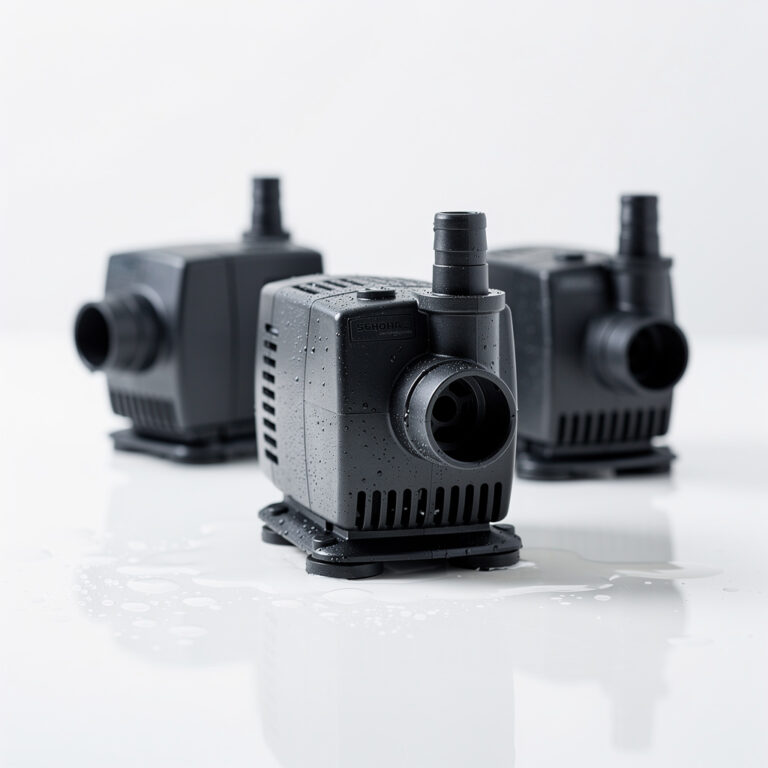
Water pumps for circulation
See options for flow, return lines, and tank movement.
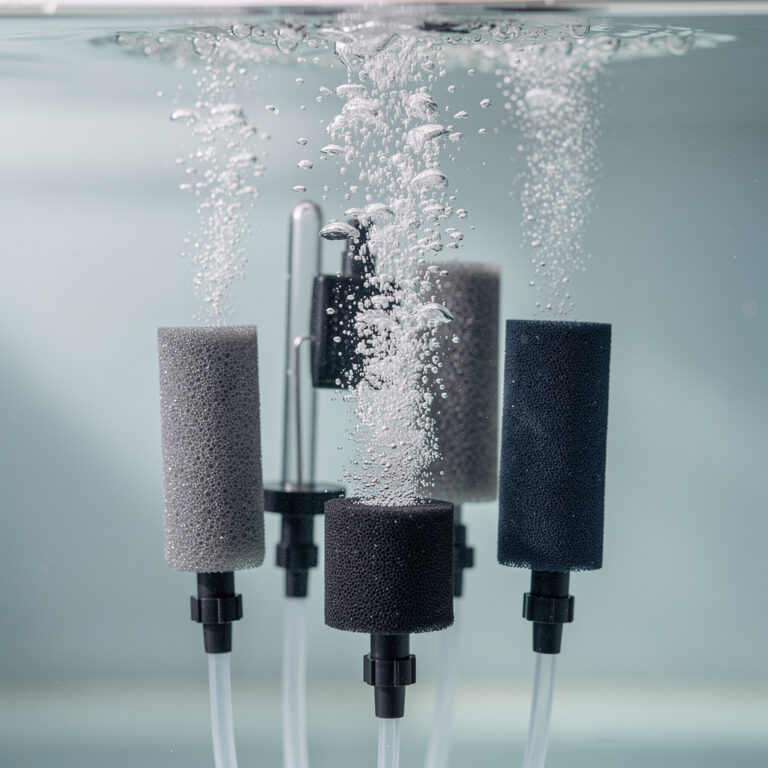
Air stones and diffusers
Find bubble makers that pair with the right pump output.
Pick the Right Path Fast
- If you want: Compare models for stones, sponge filters, and gentle surface movement. Start with: Air pumps for bubbles →
- If you want: See options for flow, return lines, and tank movement. Start with: Water pumps for circulation →
- If you want: Find bubble makers that pair with the right pump output. Start with: Air stones and diffusers →
Latest Guides
New guides are on the way — check back soon.
How We Choose & Recommend
Short, practical guidance first—then product picks when you are ready.
- We compare features and real-world use cases for Aquarium Pumps & Aeration.
- We scan user feedback for patterns (not one-off opinions).
- We call out trade-offs so you can pick confidently.
FAQ
What is the difference between an air pump and a water pump?
An air pump pushes air through airline tubing to items like air stones, sponge filters, and bubble bars. A water pump moves water through a hose, filter line, or return path. If you want bubbles and gentle surface movement, choose air gear. If you need stronger circulation or a water return, look at water flow ratings and outlet style.
How do I choose the right pump for my tank size?
Start with the tank’s water volume and the job you want the pump to do. A small tank may only need a modest air pump with one outlet, while a larger tank may need higher output or a water pump with more gallons per hour. Also check lift height, hose length, and whether the accessory needs a single port or a split line.
What features matter most when buying aeration gear?
Focus on output, noise, and included parts. Output tells you how much air or water it can move. Noise matters a lot near a desk or bedroom. It also helps to check for airline tubing, connectors, suction cups, check valves, or splitters, because missing parts can turn a simple purchase into extra shopping.
What common mistakes should I avoid with aquarium pumps?
One common mistake is choosing a pump that is far too strong for the tank. Another is forgetting tubing size, hose diameter, or a needed adapter. Buyers also skip the noise check and end up with a loud hum on a shelf. It is also easy to mix up air and water pumps, which leads to poor flow and wasted money.
How do I get the best performance from an air pump?
Keep the airline neat, use the right tube size, and pair the pump with an air stone or sponge filter that matches the output. A check valve helps protect the line from backflow. If bubbles look weak, inspect the tubing, the stone, and any splitter for clogs, kinks, or loose joints before replacing the pump.
Which accessories are worth looking for with pump purchases?
Useful extras include airline tubing, a check valve, a tee or splitter, and suction cups for routing the line cleanly. For water pumps, adapters and hose fittings matter just as much. If the product includes an air stone or sponge filter attachment, that can save time and make the listing easier to compare.
🐾 Our Top 3 Aquarium Pumps & Aeration
Uniclife 64 GPH Aquarium Air Pump
This air pump features dual outlets with adjustable airflow controlled by a rotary knob. It includes an air stone, airline tubing, check valve, and connector accessories, suitable for 10-100 gallon fish tanks.
Pawfly Aquarium Air Pump Kit
This compact air pump offers a maximum airflow rate of 30 GPH and operates at 2 watts. The kit includes an air stone, nano bio sponge filter, airline tubing, and check valve accessories suitable for 3-20 gallon tanks or buckets.
HITOP Dual Outlet Aquarium Air Pump
This electric air pump features a dual outlet and adjustable air volume controlled manually. It operates quietly and is suitable for aquariums ranging from 10 to 100 gallons, including necessary accessories.
Carefully selected Aquarium Pumps & Aeration tested for quality and value by PetGearAdvisor experts.