
Foraging Toys for Dogs
Find toys that fit your dog’s play style, feeding routine, and chew strength.
Last updated:
Quick answer
Foraging toys give dogs a simple job: sniff, nudge, paw, lick, or pull to find food.
- Updated for 2026
- Source-backed comparisons
- Reader-first buying guides
- Transparent affiliate disclosure
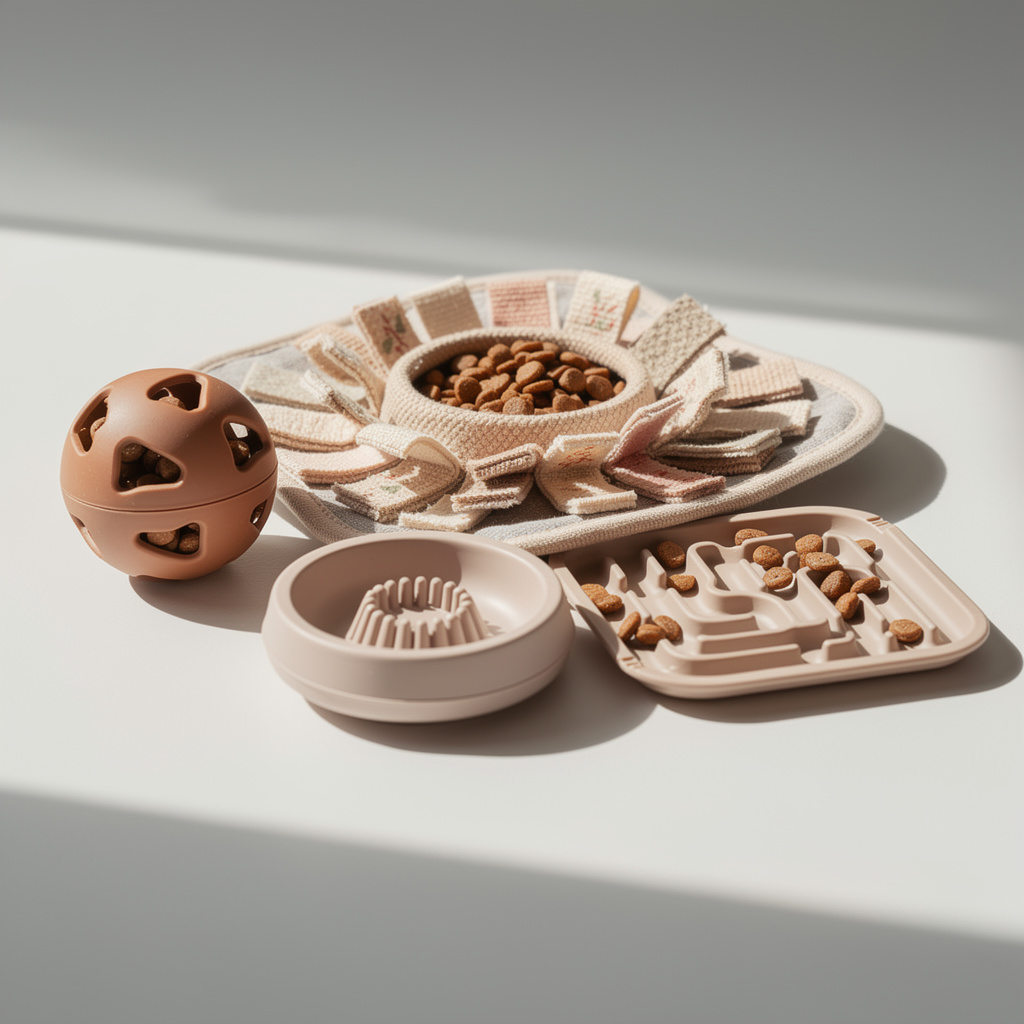
Foraging toys give dogs a simple job: sniff, nudge, paw, lick, or pull to find food. Some hold kibble in hidden pockets. Others use sliding lids, soft folds, or puzzle pieces that reveal treats in steps. The right toy can turn mealtime or playtime into a slower, more active task without needing a lot of space or setup.
This sub-hub helps you compare the main styles of foraging toys and what they are built for. A small dog may do well with a soft snuffle mat or a light puzzle board. A strong chewer may need a sturdier design with fewer loose parts. Busy dogs may like toys that keep them occupied longer, while cautious dogs often need a simpler layout with easy wins at first.
PetGearAdvisor focuses on the details that matter in real homes: size, material, cleaning, durability, and how hard the toy is to use. We look at manufacturer specs, review patterns, and buyer feedback so you can avoid common mistakes like choosing a toy that is too hard, too flimsy, or too small for your dog’s mouth. The goal is to help you find a foraging toy that fits your dog’s routine, not just one that looks interesting on the shelf.
Key highlights
- Matches different play styles
- Can slow down fast eaters
- Helps dogs stay busy indoors
- Works best by size and skill
How to choose (and common mistakes)
Start with your dog’s size, mouth shape, and chewing strength. A toy that is too small can be a choking risk, while one that is too hard may frustrate a beginner. Look for the type of foraging action your dog already enjoys: sniffing, pawing, licking, or moving parts. That makes the first try easier.
Next, check how the toy is built. Soft fabric styles are often easier to wash, while hard puzzle toys may hold up better for dogs that play rough. Think about whether you want the toy for meals, treats, or short play sessions. A common mistake is buying the hardest puzzle first. Another is choosing a toy with too many tiny pieces or deep spaces that are hard to clean. Pick the simplest version that still gives your dog a fun challenge.
⚡ Quick Picks: Foraging Toys
Three strong options to start with. Pick one that matches your goal, then jump to the guides below.

Bird Shredding Foraging Hanging Toy
This bird toy features brightly colored crinkly paper stuffed inside foraging elements. It is designed to hang in bird cages and is suitable for various small bird species like conures, cockatiels, budgies, lovebirds, and parrotlets.

Kyouki Parrot Foraging Toy Box Medium
This foraging box includes natural materials like apple wood, coconut, seagrass, corn, wicker ball, and pine cone in various sizes and textures. It is suitable for small to medium birds such as parakeets, cockatiels, conures, and lovebirds.

Super Bird Creations Foraging Toy
This 5” x 3” x 7.5” toy is made from natural seagrass, vine stars, wood beads, and crinkle paper, featuring a pickin’ pocket design for small animals to explore.
Carefully selected Foraging Toys tested for quality and value by PetGearAdvisor experts.
Related Topics
Avian Chew Toys
Noise and Bell Toys
Ladders and Climbing Toys
Mirrors
Bird Swings
Latest Guides
New guides are on the way — check back soon.
How We Choose & Recommend
Short, practical guidance first—then product picks when you are ready.
- We compare features and real-world use cases for Foraging Toys.
- We scan user feedback for patterns (not one-off opinions).
- We call out trade-offs so you can pick confidently.
FAQ
What is a foraging toy for dogs?
A foraging toy is a product that hides kibble or treats so a dog must search, paw, sniff, lick, or move parts to get the food out. Common styles include snuffle mats, treat-dispensing balls, and sliding puzzle boards. They can be used for meals or short play sessions. Start with a simple design and see how your dog interacts.
How do I choose the right difficulty?
Pick a toy that matches your dog’s current skill, not the hardest one on the shelf. Beginners often do best with open pockets, large fabric folds, or easy treat drops. Dogs that already enjoy puzzle work may handle sliding lids or layered chambers. If your dog gives up fast, go easier; if they solve it in seconds, go up one step.
Are foraging toys better for meals or treats?
They can work for both, but meals are a smart place to start if the toy is large enough for the kibble size. Dry food often moves well in snuffle mats, puzzle cups, and slow-feeder styles. Sticky treats may clog openings or stain fabric. Check the toy’s fill size and clean it after each meal to avoid buildup.
What material is best for a foraging toy?
It depends on how your dog plays. Soft fleece and fabric are common for sniffing games and are usually easy to fold and wash. Hard plastic or rubber is better for dogs that push, nose, or chew more firmly. Look for smooth edges, sturdy seams, and food-safe materials. Avoid thin fabrics if your dog likes to shred.
How do I clean a foraging toy?
Check the care tag before the first use. Many fabric toys can go in the washer on a gentle cycle, while hard puzzle pieces may need warm water, mild soap, and air drying. Remove crumbs after every session so food does not build up in seams or corners. Let all parts dry fully before storing them.
What should I watch for during first use?
Watch whether your dog gets stuck, frustrated, or tries to rip the toy apart. Make sure the openings are not too tight for the kibble you chose, and confirm the toy stays in place on the floor. If your dog can tear fabric or lift small pieces free, step in and switch to a sturdier style. Keep the first test short.
Related in this hub
🐾 Our Top 3 Foraging Toys
Bird Shredding Foraging Hanging Toy
This bird toy features brightly colored crinkly paper stuffed inside foraging elements. It is designed to hang in bird cages and is suitable for various small bird species like conures, cockatiels, budgies, lovebirds, and parrotlets.
Kyouki Parrot Foraging Toy Box Medium
This foraging box includes natural materials like apple wood, coconut, seagrass, corn, wicker ball, and pine cone in various sizes and textures. It is suitable for small to medium birds such as parakeets, cockatiels, conures, and lovebirds.
Super Bird Creations Foraging Toy
This 5” x 3” x 7.5” toy is made from natural seagrass, vine stars, wood beads, and crinkle paper, featuring a pickin’ pocket design for small animals to explore.
Carefully selected Foraging Toys tested for quality and value by PetGearAdvisor experts.